



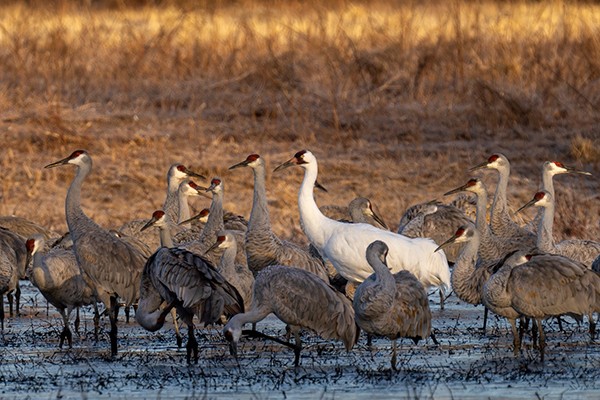
Each autumn, as the seasons change and the snow starts to fall in the far north, a trumpet-like call can be heard for miles across California’s Central Valley–it’s the call of the Sandhill Cranes as they arrive by the thousands. These ancient and elegant birds have captured the hearts of bird lovers, especially Lisa Myers, owner of the Los Gatos Birdwatcher, who calls them her favorite bird. (Photo from the International Crane Foundation: Whooping Crane standing with Sandhill Cranes)
Where California’s Wintering Cranes Come From
Some of our wintering cranes arrive from as far north as Siberia to spend the winter months in the wetlands and farmlands of California’s Central Valley. Some will go as far south as Mexico, but in California they can be found from Chico to Bakersfield.
How Many Crane Species Exist and Which Ones Live in N. America
There are 15 different species of cranes worldwide, with two species found in North America. The Sandhill Cranes numbering at over 1,500,000 worldwide are the most numerous of all the cranes, and the Whooping Crane.
Why Whooping Cranes are Endangered
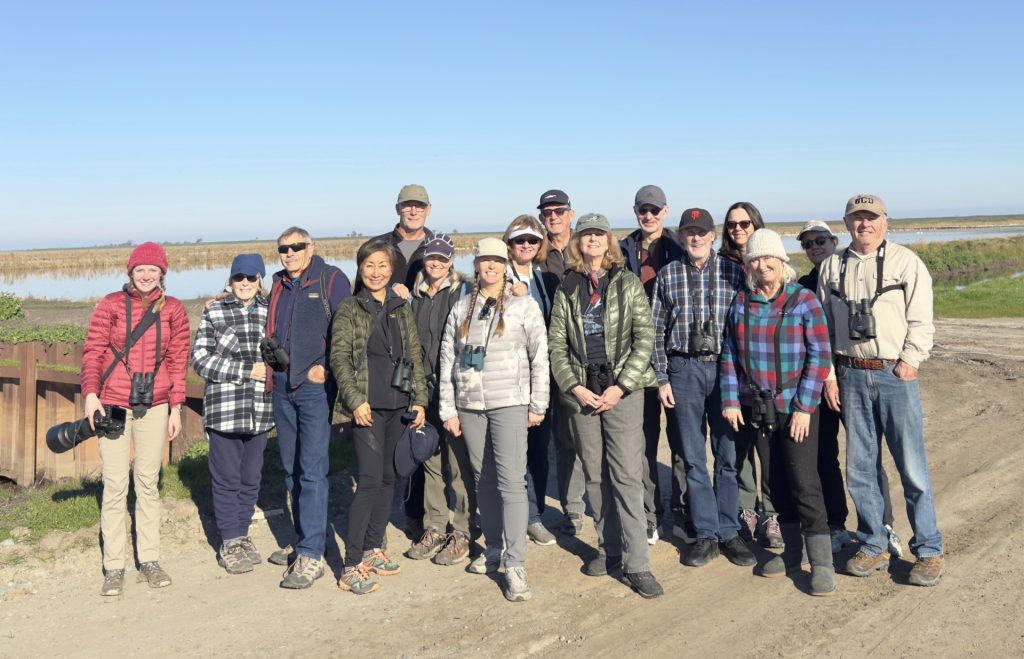
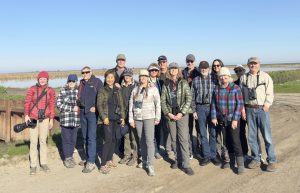
The Whooping Crane was saved from the brink of extinction and was one of the first species protected under the Endangered Species Act. It is the most endangered of all the cranes. With great efforts being made to save our tallest bird in North America, there are now over 800 Whooping Cranes and their numbers are increasing. Most winter along the Gulf Coast of Texas and will return to Canada in the spring to nest and raise young. (Photo: Let’s Go Birding’s Annual Crane Tour. Group photo on Staten Island Road)
Crane Habitat Loss in California Wetlands, Farmland, and the Impact of Development
All species of cranes, including Sandhill Cranes, need marshland and open habitat like prairies, or grain fields to survive. However, over time, many of those natural habitats have been drained, developed or farmed with crops and livestock that keep cranes away.
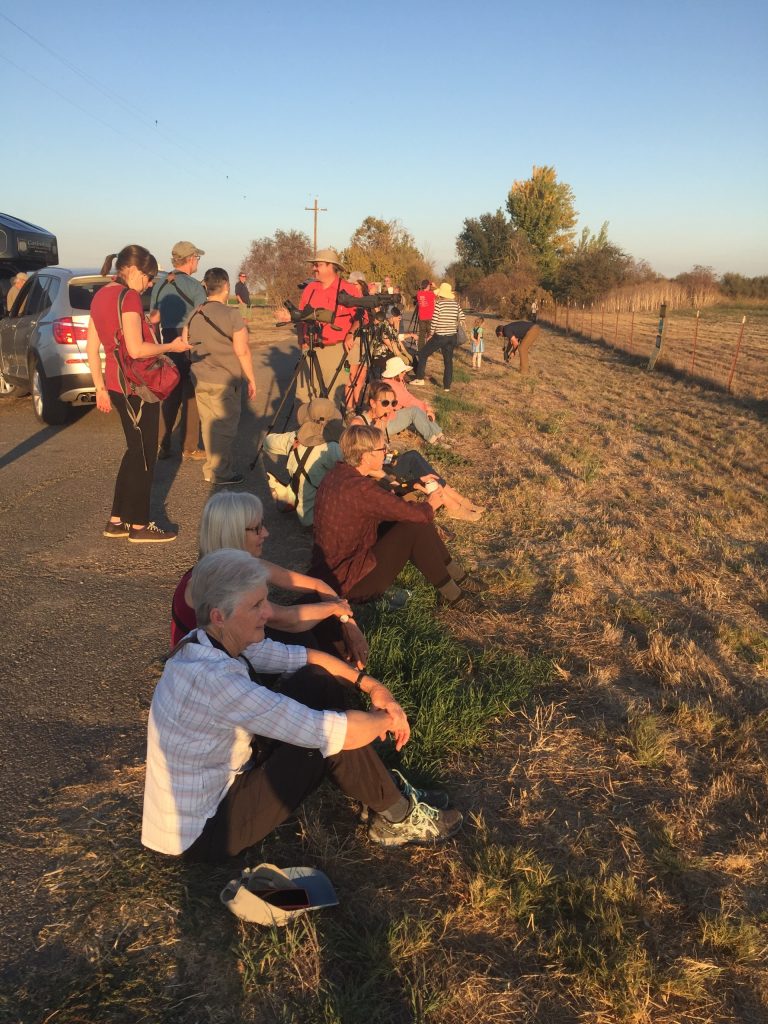
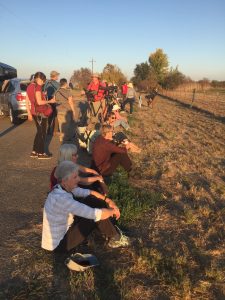
Acres of vineyards now cover what was once crane habitat and cranes cannot land or roost in a vineyard resulting in further habitat loss. With fewer places for cranes to land during their long migration, or to feed and spend the winter, conservation efforts have been on the rise. (Photo: Crane watchers at Woodbridge Road)
How Farmers and Conservationists are Helping Cranes with Flooded Fields, Rice Crops, Shared Solutions
Many conservation organizations work with farmers to grow crops like rice and corn that also benefit cranes. After those crops are harvested, cranes will feast on the grain, insects, and tubers leftover in the fields. Asking local farmers to flood some of their fields provides cranes with a safe place to roost overnight, and also a food source as there are many great things to eat in flooded farmland which benefits many birds. It’s a partnership between agriculture and conservation that shows how humans and wildlife can coexist. See the video in the resources below.
International Crane Conservation Efforts–Protecting Cranes Worldwide
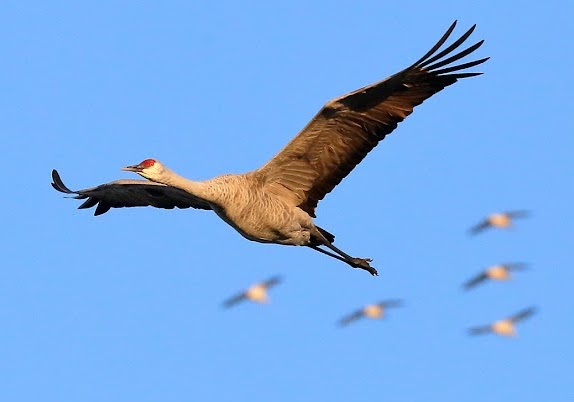
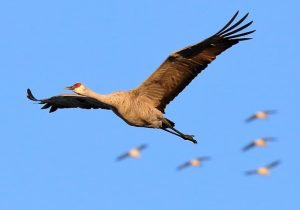
Store owner Lisa Myers has been collaborating with folks throughout North America regarding crane conservation including Dr. George Archibald, co-founder of the International Crane Foundation and author of Dancing with Cranes. This year, George turns 80 and has launched an ambitious campaign to raise $80 million for global crane conservation, ensuring these ancient birds survive for generations to come. It’s a fitting tribute to a species that has danced across the Earth for millions of years. George stopped by the Los Gatos Birdwatcher to learn about the store and talk about what can be done to increase habitat for the Sandhill Cranes that winter in California. (Photo by Tony Woo of Sandhill Cranes in California’s Central Valley)
When and Where to See Cranes in California
The best time to see Sandhill Cranes in California is from October through February, especially near Woodbridge Ecological Reserve in Lodi, one of the state’s premier crane-viewing areas. The Lodi Sandhill Crane Festival (held every November) celebrates their return with tours, exhibits, and art.
How You Can Help the Cranes
Whether it’s supporting local refuges, planting habitat-friendly crops, or simply spreading awareness, every effort counts. The cranes remind us that grace and resilience can coexist, even in a changing world. From all of us at the Los Gatos Birdwatcher, we celebrate these remarkable birds and the people who care for them, from farmers and conservationists to bird lovers like you.
Crane Conservation Resources
- Whooping Crane Festival – portaransas.org
- Save Our Sandhill Cranes – soscranes.org
- Lodi Sandhill Crane Festival – lodisandhillcrane.org
- Worldwide Crane Conservation – savingcranes.org
- BirdReturns (A program to support temporary wetlands). See the video here…
Each autumn, as the seasons change and the snow starts to fall in the far north, a trumpet-like call can be heard for miles across California’s Central Valley–it’s the call of the Sandhill Cranes as they arrive by the thousands. These ancient and elegant birds have captured the hearts of bird lovers, especially Lisa Myers, owner of the Los Gatos Birdwatcher, who calls them her favorite bird. (Photo from the International Crane Foundation: Whooping Crane standing with Sandhill Cranes)
Where California’s Wintering Cranes Come From
Some of our wintering cranes arrive from as far north as Siberia to spend the winter months in the wetlands and farmlands of California’s Central Valley. Some will go as far south as Mexico, but in California they can be found from Chico to Bakersfield.
How Many Crane Species Exist and Which Ones Live in N. America
There are 15 different species of cranes worldwide, with two species found in North America. The Sandhill Cranes numbering at over 1,500,000 worldwide are the most numerous of all the cranes, and the Whooping Crane.
Why Whooping Cranes are Endangered
The Whooping Crane was saved from the brink of extinction and was one of the first species protected under the Endangered Species Act. It is the most endangered of all the cranes. With great efforts being made to save our tallest bird in North America, there are now over 800 Whooping Cranes and their numbers are increasing. Most winter along the Gulf Coast of Texas and will return to Canada in the spring to nest and raise young. (Photo: Let’s Go Birding’s Annual Crane Tour. Group photo on Staten Island Road)
Crane Habitat Loss in California Wetlands, Farmland, and the Impact of Development
All species of cranes, including Sandhill Cranes, need marshland and open habitat like prairies, or grain fields to survive. However, over time, many of those natural habitats have been drained, developed or farmed with crops and livestock that keep cranes away.
Acres of vineyards now cover what was once crane habitat and cranes cannot land or roost in a vineyard resulting in further habitat loss. With fewer places for cranes to land during their long migration, or to feed and spend the winter, conservation efforts have been on the rise. (Photo: Crane watchers at Woodbridge Road)
How Farmers and Conservationists are Helping Cranes with Flooded Fields, Rice Crops, Shared Solutions
Many conservation organizations work with farmers to grow crops like rice and corn that also benefit cranes. After those crops are harvested, cranes will feast on the grain, insects, and tubers leftover in the fields. Asking local farmers to flood some of their fields provides cranes with a safe place to roost overnight, and also a food source as there are many great things to eat in flooded farmland which benefits many birds. It’s a partnership between agriculture and conservation that shows how humans and wildlife can coexist. See the video in the resources below.
International Crane Conservation Efforts–Protecting Cranes Worldwide
Store owner Lisa Myers has been collaborating with folks throughout North America regarding crane conservation including Dr. George Archibald, co-founder of the International Crane Foundation and author of Dancing with Cranes. This year, George turns 80 and has launched an ambitious campaign to raise $80 million for global crane conservation, ensuring these ancient birds survive for generations to come. It’s a fitting tribute to a species that has danced across the Earth for millions of years. George stopped by the Los Gatos Birdwatcher to learn about the store and talk about what can be done to increase habitat for the Sandhill Cranes that winter in California. (Photo by Tony Woo of Sandhill Cranes in California’s Central Valley)
When and Where to See Cranes in California
The best time to see Sandhill Cranes in California is from October through February, especially near Woodbridge Ecological Reserve in Lodi, one of the state’s premier crane-viewing areas. The Lodi Sandhill Crane Festival (held every November) celebrates their return with tours, exhibits, and art.
How You Can Help the Cranes
Whether it’s supporting local refuges, planting habitat-friendly crops, or simply spreading awareness, every effort counts. The cranes remind us that grace and resilience can coexist, even in a changing world. From all of us at the Los Gatos Birdwatcher, we celebrate these remarkable birds and the people who care for them, from farmers and conservationists to bird lovers like you.
Crane Conservation Resources
- Whooping Crane Festival – portaransas.org
- Save Our Sandhill Cranes – soscranes.org
- Lodi Sandhill Crane Festival – lodisandhillcrane.org
- Worldwide Crane Conservation – savingcranes.org
- BirdReturns (A program to support temporary wetlands). See the video here…
Photos:
- Crane watchers at Woodbridge Road
- Whooping Crane standing with Sandhill Cranes –International Crane Foundation photo
- Sandhill Cranes in California’s Central Valley –Tony Woo
- Let’s Go Birding’s Annual Crane Tour. Group photo on Staten Island Road.