



A Tiny Miracle of Engineering
At the Los Gatos Birdwatcher, we spend our time talking with customers about backyard birds, wild bird feeding, and the joy of birdwatching in Los Gatos and beyond. But behind every chickadee, hummingbird, or grosbeak you see at your feeder begins something extraordinary: an egg. A bird’s egg is one of nature’s most elegant designs, not just a shell with something inside—it’s a complete life-support system.
Every fertile egg has a shell, made primarily of calcium carbonate; strong enough to protect the developing embryo, yet porous enough to allow essential gases to pass through. Just beneath it lie two delicate membranes that help guard against bacteria. The albumen (egg white) cushions the embryo and provides water and protein. The yolk contains concentrated nutrients—fats, vitamins, and energy—that fuel is what a chick uses to grow, from a single fertilized cell to a fully formed bird.
For those who enjoy birding, understanding the breeding season, bird eggs, and nests adds a whole new layer to the enjoyment of birds. The shape of eggs reflects evolutionary adaptation. Cliff-nesting birds lay eggs that are more pointed which means they roll in tight circles rather than off the cliff edge. Ground-nesting birds frequently lay speckled eggs that provide camouflage. Every color, shape, and marking has a story tied to survival.
Built for Life: How Chicks Develop
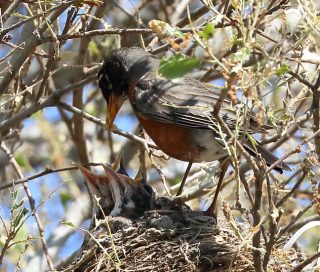
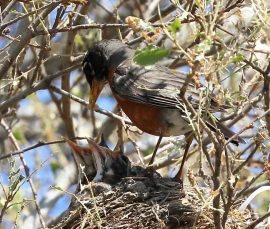
Not all baby birds enter the world the same way. Some species hatch out of the egg —featherless, tiny, without the ability to walk and completely dependent on their parents. These species are considered altricial young and include songbirds like chickadees, wrens, jays and raptors. (Photo: American Robin with altricial young in nest -Tony Woo)
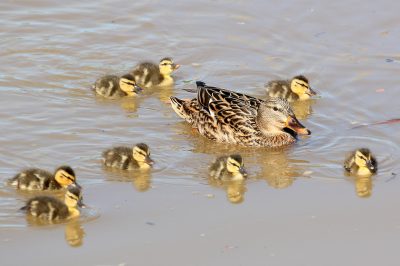
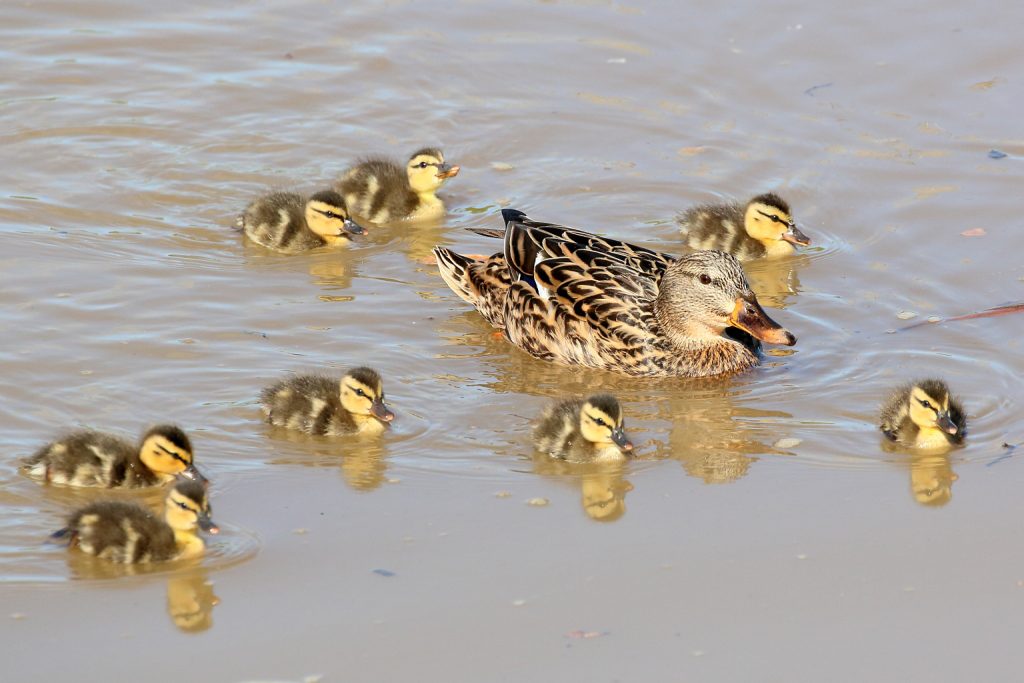
Other species when they hatch are well-developed, covered in down, and ready to move about within hours and are called precocial young. They include waterfowl like ducks and geese and also quail and shorebirds. (Photo: Mallard mom with precocial ducklings already swimming after just hatching -Tony Woo)
Inside the egg, development is carefully timed. Some birds like owls will begin incubating after the first egg is laid, which means chicks hatch in the order the eggs were laid—resulting in different aged chicks within a brood. Other species like geese and ducks wait until all the eggs are laid before incubating begins, allowing all the chicks to hatch at roughly the same time.
Warmth from Within: The Brood Patch
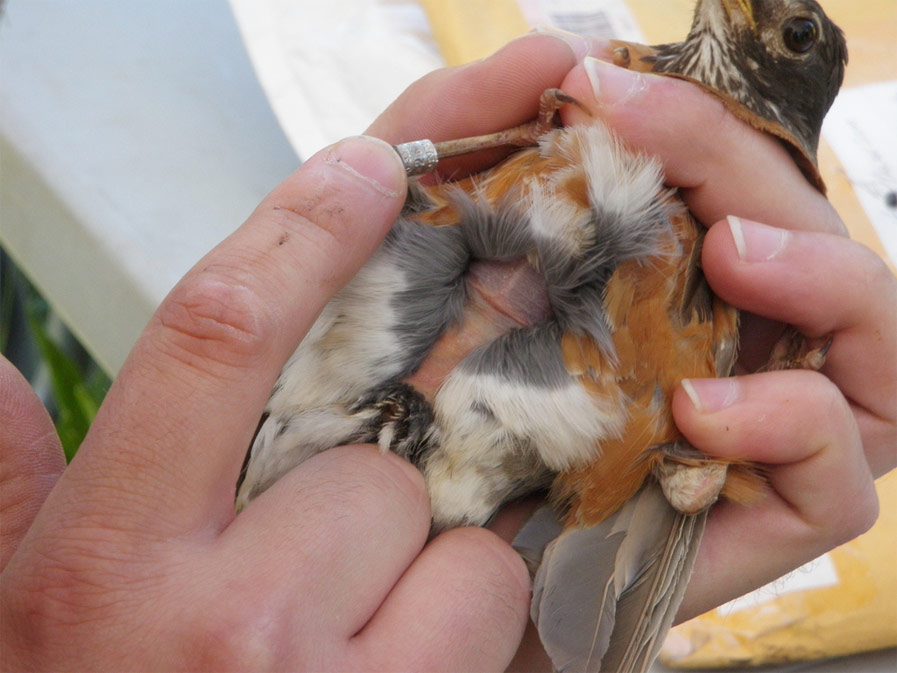
During nesting season when the parents are incubating, the adult birds develop a brood patch—an area of bare skin on the belly or along the side of the parent bird which allows direct heat transfer to the eggs. This highly vascular patch ensures that eggs are kept at just the right temperature for proper development. The adult bird will carefully turn the eggs during incubation to make sure the heat transfer is successful. (Photo: example of brood patch on belly of American Robin)
During nesting season when the parents are incubating, the adult birds develop a brood patch—an area of bare skin on the belly or along the side of the parent bird which allows direct heat transfer to the eggs. This highly vascular patch ensures that eggs are kept at just the right temperature for proper development. The adult bird will carefully turn the eggs during incubation to make sure the heat transfer is successful. (Photo: example of brood patch on belly of American Robin)
Nature Isn’t Always Gentle
While we often think of nests as peaceful places, nature can be surprisingly complex. Some species lay more eggs than they can realistically raise. In times of limited food, this can lead to siblicide, where stronger chicks outcompete—or even kill—weaker siblings. It’s a difficult reality, but one that increases the chances that at least some offspring will survive.
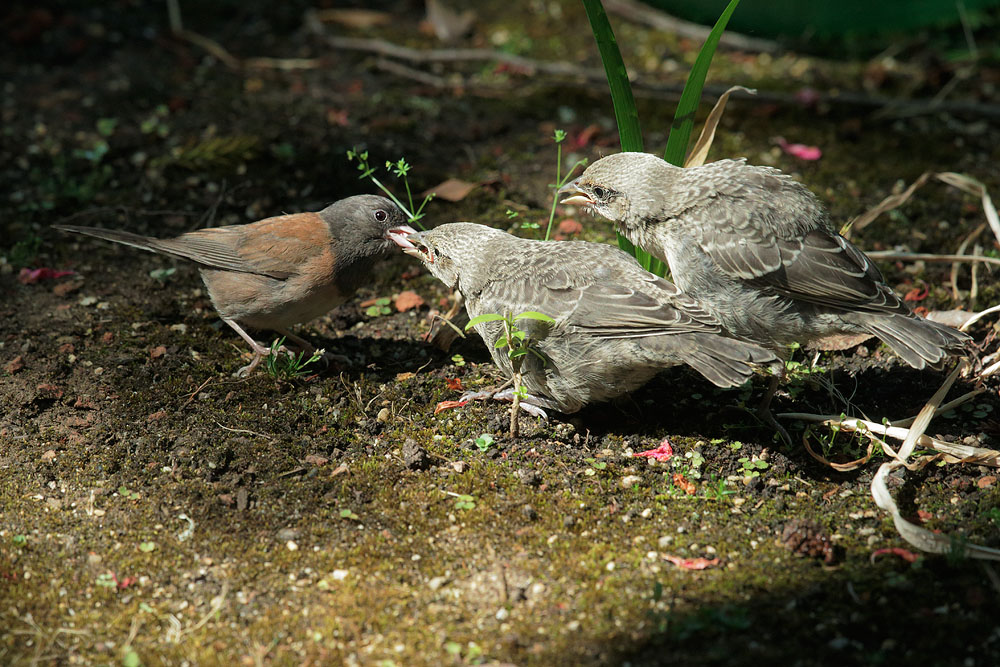
(Photo: Dark-eyed Junco feeding two Brown-headed Cowbird nestlings -Tom Grey)
Other birds engage in egg dumping (also called brood parasitism), laying their eggs in another bird’s nest. In these cases, timing matters—some eggs hatch earlier or later depending on when they were laid, creating a dynamic and sometimes competitive nest environment. Brown-headed Cowbirds are considered a “nest parasite”. After a pair successfully mates, the female will lay her egg in another species nest. That host bird will then incubate and raise the cowbird chick. The cowbird chick often out competes its nest mates. One female Brown-headed Cowbird can lay up to 36 eggs in one season!
Other birds engage in egg dumping (also called brood parasitism), laying their eggs in another bird’s nest. In these cases, timing matters—some eggs hatch earlier or later depending on when they were laid, creating a dynamic and sometimes competitive nest environment. Brown-headed Cowbirds are considered a “nest parasite”. After a pair successfully mates, the female will lay her egg in another species nest. That host bird will then incubate and raise the cowbird chick. The cowbird chick often out competes its nest mates. One female Brown-headed Cowbird can lay up to 36 eggs in one season! (Photo: Dark-eyed Junco feeding two Brown-headed Cowbird nestlings -Tom Grey)
Protecting What Matters
Today, it is illegal to collect wild bird eggs or disturb active nests—a protection made possible by laws like the Migratory Bird Treaty Act. These safeguards are essential for the birds we support through responsible wild bird feeding and habitat care. As the nesting season unfolds, the most meaningful things we can do are: observe, appreciate, stop trimming trees and bushes, keep your cats indoors, don’t introduce poisons to your yard, and give birds the space they need to raise their young.
Whether you’re birdwatching in Los Gatos, setting up feeders, or creating a wildlife-friendly yard, every choice you make can help protect the next generation of birds. And it all begins with an egg.