



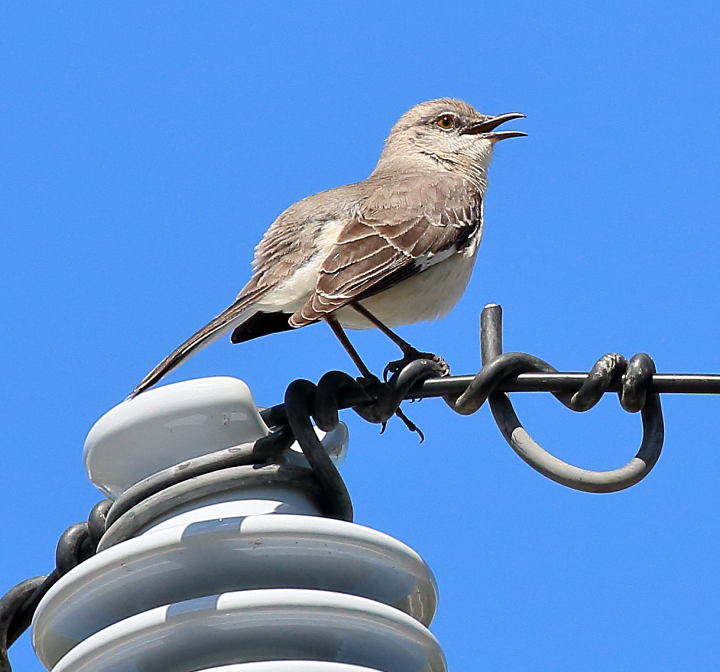
The world feels noisy. Our attention is pulled in every direction. And yet step outside, even for a few minutes and something shifts. A chickadee calls. A hummingbird zips past. A finch lands at the feeder. Your breathing slows. Your shoulders drop. You feel better. This isn’t just a feeling. It’s biology. [Photo: Mockingbird singing on the wire by Tony Woo]
The world feels noisy. Our attention is pulled in every direction. And yet step outside, even for a few minutes and something shifts. A chickadee calls. A hummingbird zips past. A finch lands at the feeder. Your breathing slows. Your shoulders drop. You feel better. This isn’t just a feeling. It’s biology. [Photo: Mockingbird Singing on the Wire by Tony Woo]
Birds and the Brain: What Science Shows
Spending time with birds—watching or listening—has measurable effects on mental health and brain function. A 2022 study published in Scientific Reports found that seeing or hearing birds was associated with improved mental well-being, with benefits lasting for several hours after the interaction. This was true even in people with depression. When they were around birds, participants reported: lower anxiety, greater happiness, and an increased sense of calm.
Nature Exposure Changes the Brain
Birds are often our most accessible connection to nature. Birds act as a kind of entry point into that experience—in urban and suburban settings like Los Gatos. It’s not just seeing birds, it’s hearing them too. Research from Stanford University shows that spending time in natural environments:
reduces activity in the brain linked to rumination (that loop of anxious thoughts)
supports emotional regulation and clarity
Why Birdsong Matters
A 2017 study in the journal BioScience found that natural sounds (especially birdsong) help reduce stress and improve cognitive performance. Birdsong can signal safety–from an evolutionary standpoint. Birdsong engages our attention without overwhelming it and gently pulls us out of stress-states. In other words, your brain interprets birdsong as: “You’re safe. You can relax now.”
Birding as “Soft Fascination”
Psychologists use the term “soft fascination” to describe activities that hold your attention but don’t demand effort. Birdwatching is a perfect example. Looking for movement in the trees, noticing color, listening for calls—it gives your brain something to do without overloading it. This allows your directed attention (the kind you use for work, screens, problem-solving) to rest and recover.
Your Backyard Is a Mental Health Space
You don’t have to go far. Right here in the South Bay, Anna’s hummingbirds are active year-round. Finches, chickadees, and jays visit daily. And the variety of species in your yard will change from season to season. When you put out fresh seed, maintain a bird bath, or simply pause and watch; you’re not just feeding birds, you’re supporting your own well-being.
A Simple Practice
Try stepping outside for five minutes. Put your phone away. Listen for birds before you look for them. Notice movement and sound. That’s it. No checklist. No pressure to identify anything. Just presence.