



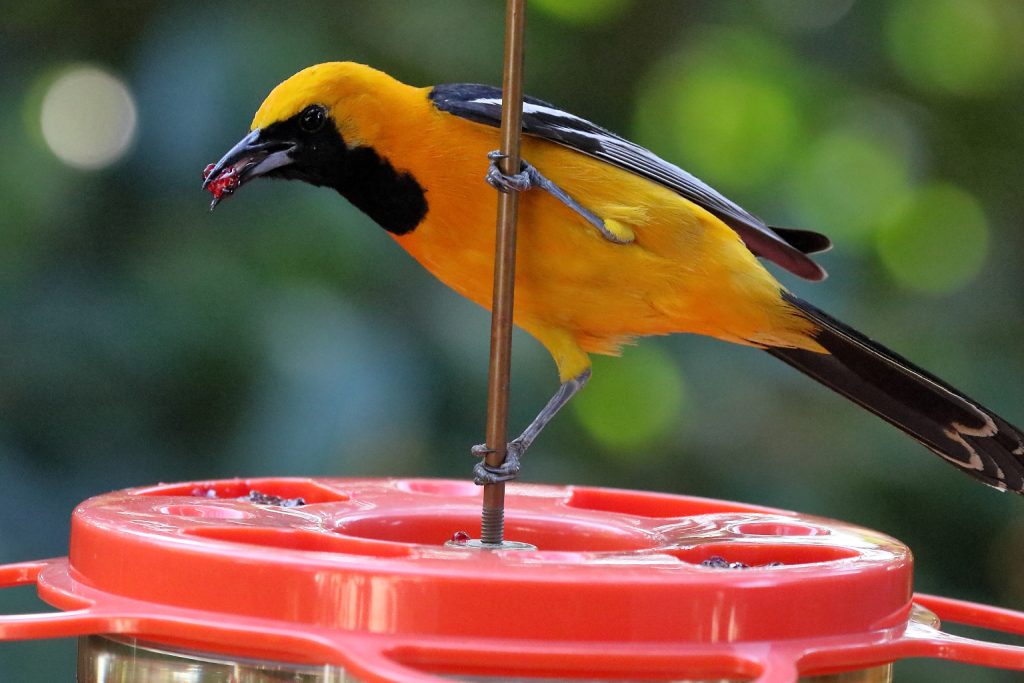
Oriole at feeder by Tony Woo
In April, we can find some of our most exciting spring arrivals. Each of these birds has traveled from wintering grounds in Mexico or Central America—with more on the way.
- Allen’s Hummingbird – A flash of copper. They prefer coastal habitats
- Black-headed Grosbeak – They come to seed feeders and have a beautiful song
- Hooded & Bullock’s Orioles – both drink nectar and eat fruit and insects
- Western Flycatcher – found in shaded forests and near streams
- Western Tanager – of all the tanagers the “western” migrates the farthest north
Oriole at feeder by Tony Woo
In April, we can find some of our most exciting spring arrivals. Each of these birds has traveled from wintering grounds in Mexico or Central America—with more on the way.
- Allen’s Hummingbird – A flash of copper. They prefer coastal habitats
- Black-headed Grosbeak – They come to seed feeders and have a beautiful song
- Hooded & Bullock’s Orioles – both drink nectar and eat fruit and insects
- Western Flycatcher – found in shaded forests and near streams
- Western Tanager – of all the tanagers the “western” migrates the farthest north
Want to “See” Migration at Night?
There’s a tool we love called BirdCast from the Cornell Lab of Ornithology birdcast.org. It uses weather radar to show bird migration in real time. Many birds migrate at night and on active nights, you can actually see waves of birds moving over the South Bay Area. It’s a powerful reminder that migration isn’t something far away, it’s happening right here over our heads.
Your Backyard As a Rest Stop
For migrating birds, your yard can mean the difference between survival and exhaustion. After a long flight, birds need food for high-energy fuel, water for drinking and bathing, safe cover in trees and shrubs for rest. This is where simple things make a big impact. Even a small space can support migrating birds passing through. If you include the following in your yard, it will help:
- Fresh seed
- Clean water in a bird bath
- Native plants or layered vegetation
- Keep cats indoors
The Science of Timing
Spring migration is driven by a combination of increasing daylight and internal biological clocks. As days lengthen, hormones trigger birds to begin their journey north. Many species time their arrival to match peak food availability, especially insects.
What We Do Locally Matters
Los Gatos sits along the Pacific Flyway, one of the most important migration routes in the world. Billions of birds move through California each spring and have done so long before we came onto the scene and took up so much open space with our cities, roads and parking lots. As a result many bird populations are declining due to habitat loss. That’s why what we do locally in our own yards can make a difference. You’re participating in something much bigger when you help the migrants along their way with fresh seed, clean water, and shelter.