




Food!
Wild Turkeys are a common sight in Los Gatos these days, so our customers are reporting. Why? Food. Throughout our San Francisco Bay Area we have a mix of oak woodland, open space, and suburban neighborhoods providing good habitat and plenty of food.
Los Gatos has something turkeys particularly like: oak trees and more importantly, acorns!
Acorns are a favorite food of Wild Turkeys especially during fall and winter. They also eat seeds, berries, grasses, insects and other foods they find while foraging on the ground. Lawns, gardens and irrigated areas can provide additional food and water. Turkeys are also seen eating birdseed that has fallen beneath feeders.
How Do Turkeys Eat Acorns Without Teeth?
Turkeys don’t have teeth, but they do have a gizzard. After food is swallowed, it eventually reaches this strong, muscular part of the digestive system. Turkeys also swallow small stones and grit. Inside the gizzard, the grit helps grind hard foods such as seeds and acorns so they can be digested.
FUN TURKEY FACTS
Why Do Male Turkeys Fan Their Tails?
The male Wild Turkey, called a tom or gobbler, is easy to recognize when he displays. He spreads his tail into a fan, lowers his wings, puffs up his feathers, and struts. This behavior is part of courtship. In spring, you can hear the males “gobble-gobble” and watch them display to either attract a female, or respond to competing males. Turkeys have social hierarchies, so some of the behavior we see between birds is related to establishing their position within the flock. Outside of the breeding season, males and females often form separate flocks.
Can Turkeys Fly?
Despite their size, Wild Turkeys can kind of fly. They spend most of their time walking and feeding on the ground, but at dusk they fly up into trees to roost for the night. So if you’re seeing Wild Turkeys walking through your neighborhood this fall, take a closer look. Our oak-filled landscape provides good habitat for them, and this is an especially good time of year to watch their behavior.
How Did Wild Turkeys Get to California?
California actually did have a native turkey species that went extinct long ago—Meleagris californica, known from fossils including the La Brea Tar Pits. It isn’t the ancestor of the Wild Turkeys walking around Los Gatos today. The Wild Turkeys we see around Los Gatos today are actually not native to California, but were introduced to our state. In the mid-1900s California wildlife managers began releasing wild-caught Turkeys from Texas, Nevada, and Colorado.. Unlike many of the farm-raised birds released earlier, these wild turkeys adapted well to California’s dry climate and oak woodland, then populations became established throughout much of the state.
Thanksgiving Table Turkeys
Farm-raised and bred for meat, the turkey you find on your Thanksgiving table is quite different from the stealthy wild birds that roam around town.
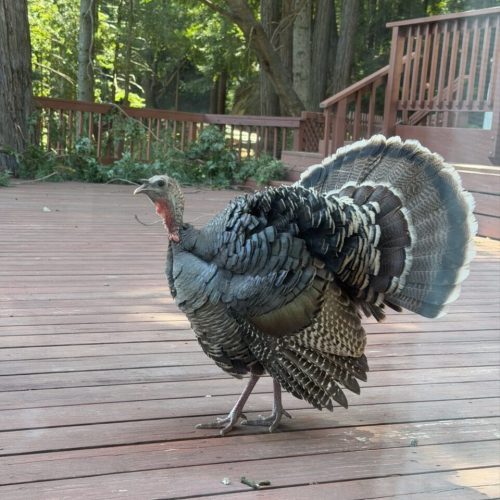
Photo: Male Turkey with full plumage on Jessica’s deck